To all my Red Flags...
Somebody say Power.

A man I had recently been talking to called me a feminist; to his chagrin, it did not make me clutch my pearls and lower my face in shame. Mind you, this was on International Women's Day! Like, God forbid you allow a woman to be a supporter of women and our rights.
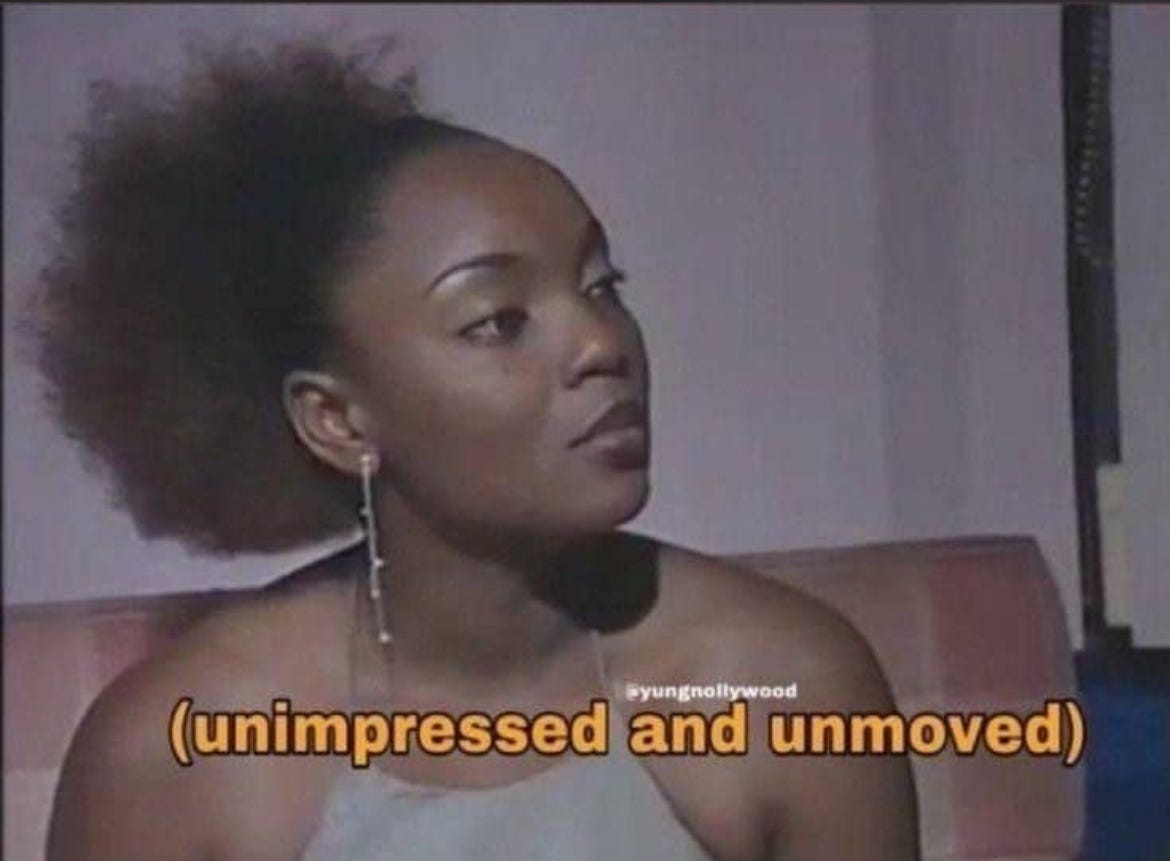
Try again, sir.
While this is not a new occurrence, it reminded me again of how the word feminism has recently been reduced to an insult, a slur, to share a box with unsavory words. I wonder how that came to be. Probably the recent online discussions, particularly those originating especially from Nigeria, that have critiqued and belittled feminist perspectives. I understand that there are diverse viewpoints on feminism, but can we all not allow our differences to lead us to trample the work women have tirelessly fought for?
It's important to acknowledge that feminism is not a monolithic ideology. It involves many beliefs and goals, all centered around achieving gender equality. While some expressions of feminism may be seen as radical or confrontational, the core aim remains the same: to dismantle systems of oppression that disadvantage women.
Some critiques will usually focus on specific actions or statements made by individuals who identify as feminists. I think it's important to distinguish between some individuals’ actions and the broader feminist movement. Just as any group can have members whose views or actions are not representative of the whole, judging the entire movement based on isolated incidents is so unfair.
Cultural context is also so important when discussing gender roles and equality, especially in Nigeria. However, the fundamental principles of human rights and dignity are universal. Addressing issues like gender-based violence, unequal access to education and economic opportunities, femicide and discriminatory laws is not about imposing Western values; it's about promoting basic human rights that Nigerian women have barely scratched the surface of and making our world safer for us.
And to those who think feminism is a "Western import"? My dear, women have been demanding equality since before the first boats of colonizers reached Africa. We just happen to have hashtags now. Google women like Moremi of Ife, Amina of Zaria, and Emotan of Benin, Funmilayo Ransome Kuti; in fact look no further than our mothers, who handled the home while building careers and who fought injustices the world had normalized.
When people claim feminism is "destroying our culture"? I wonder how weak they think our culture is. Oh, please. Our culture is strong enough to handle a little questioning, a much-needed evolution. It's not a delicate chinaware set; it's more like a mortar for pounded yams—resilient and tough. Abegi, rest; the culture will be fine; we make the culture.
I always encourage open and honest discussions that acknowledge the validity of different experiences and perspectives. Even when I don’t agree, I count it as knowledge gained regardless, which is no threat to my own opinions or beliefs. The fight continues, and I hope in the end women can finally achieve gender equality and equity.
Signed an Unraveling Feminist💟
P.S. I started this piece on IWD after a man called me a feminist in response to my many posts on my IG story celebrating women. It was used as an insult, which was ridiculous to me. Why in God’s name would being an ally for women's rights ever be a slur? The world we live in is a deeply disturbing place, honestly. We need to do better.
This IWD has been so heavy for most women, especially in Nigeria; we have a femicide problem, terrible government, and Senator Natasha Akpoti being suspended for demanding justice. Being a woman has never been more bittersweet. It may seem like one step forward, 50 steps back, but my babes, hang in there; until we have won, we can only keep going.
Love, Anu.
Okayyy, major update: I wrote this last year and never posted. I still agree with all of what I said BUT I have new thoughts…
A Flag I wear with pride…
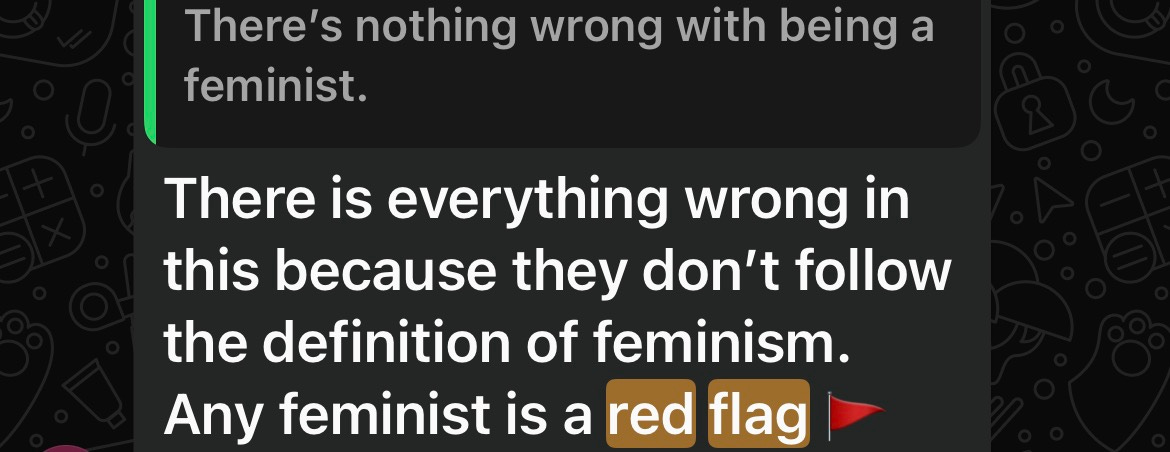
I woke up from a nap this afternoon to this message on a group I’m on. Before this I had been having a good day; fortunately, this good day was not ruined by this human; instead, the statement actually made my day! We all know what a red flag is. Well, I never thought I would be happy to be called one.
What did this person mean by this declaration, you may ask?
Nigerian women have in recent years been more vocal about our feminist inclinations. Why, you may ask? A multitude of reasons, including the rise of education, social media, and the great injustices still experienced by women all over. The reasons are endless, really. As with everything women do, this has been met with opinions and critiques.
Most of them are negative, hence the attempted twisting of said word. There is nothing Nigerian feminists have not been called, from bitter, barren, borderline crazy, and misguided; you name it, that’s us. Now we are Red flags.
If you’ve spent more than five minutes on Nigerian Twitter (X) or scrolled through a particularly “passionate” WhatsApp status lately, you’ve seen it. The ultimate diagnosis. The scarlet letter of the 21st century. Feminist.
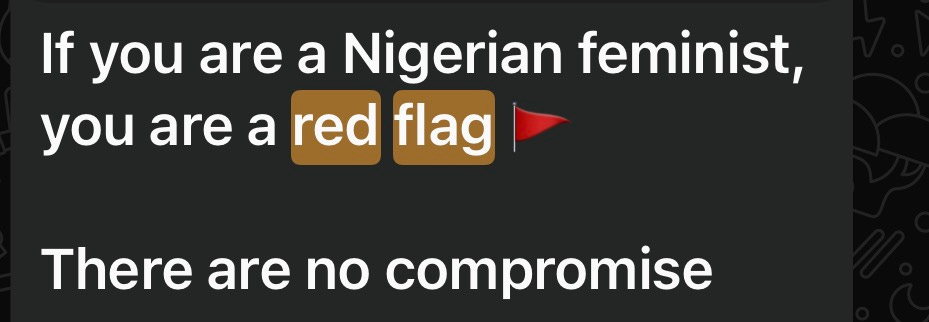
First of all, let’s take a moment to appreciate the sheer drama. “No compromise.” Not even a little bit? Not even on public holidays? It’s the kind of absolute finality usually reserved for things like bills and Lagos traffic.
But honestly? To the women holding the fort, writing the stories, screaming from the tops of the digital/physical battlegrounds, and daring to ask why the world is so unfair to girls and women, why they’re the ones always washing the plates after a three-course meal they also cooked, or why they cannot rent a flat alone or buy assets for their own future at the risk of scaring imaginary husbands: Congratulations. You’ve officially been promoted to a “Red Flag.”
And here is why you should fly that flag until your arms ache.
The Anatomy of a “Nigerian Red Flag”
In this context, being a red flag is actually a very helpful shorthand. When someone calls you this, what they are actually saying—if you translate it from fragility to English—is
Warning: This woman has boundaries.
Danger: She thinks for herself and, worse, she expects you to do the same.
Caution: Cannot be manipulated with a ‘so you’re one of them’ comment and a half-hearted apology.
If advocating for women’s right to exist, earn, and lead without being palatable or humbled makes you a hazard, then you are in excellent company.
Wear It Like a Gele, please
Historically, Nigerian women have always been red flags to those who preferred them silent and docile. From the Aba Women’s Riot to the modern-day giants in tech, law, and literature, our history and reality is painted in the exact shade of crimson they are so afraid of.
When they see a red flag, they see a problem. But when we see that flag, we see:
Freedom: The audacity to say no without explaining the why.
Community: Knowing that if you are a red flag, you are part of a sisterhood that refuses to shrink.
Clarity: It’s a wonderful filter. Let the red flag wave high enough so that anyone looking for a doormat knows exactly which way to run—far away from you.
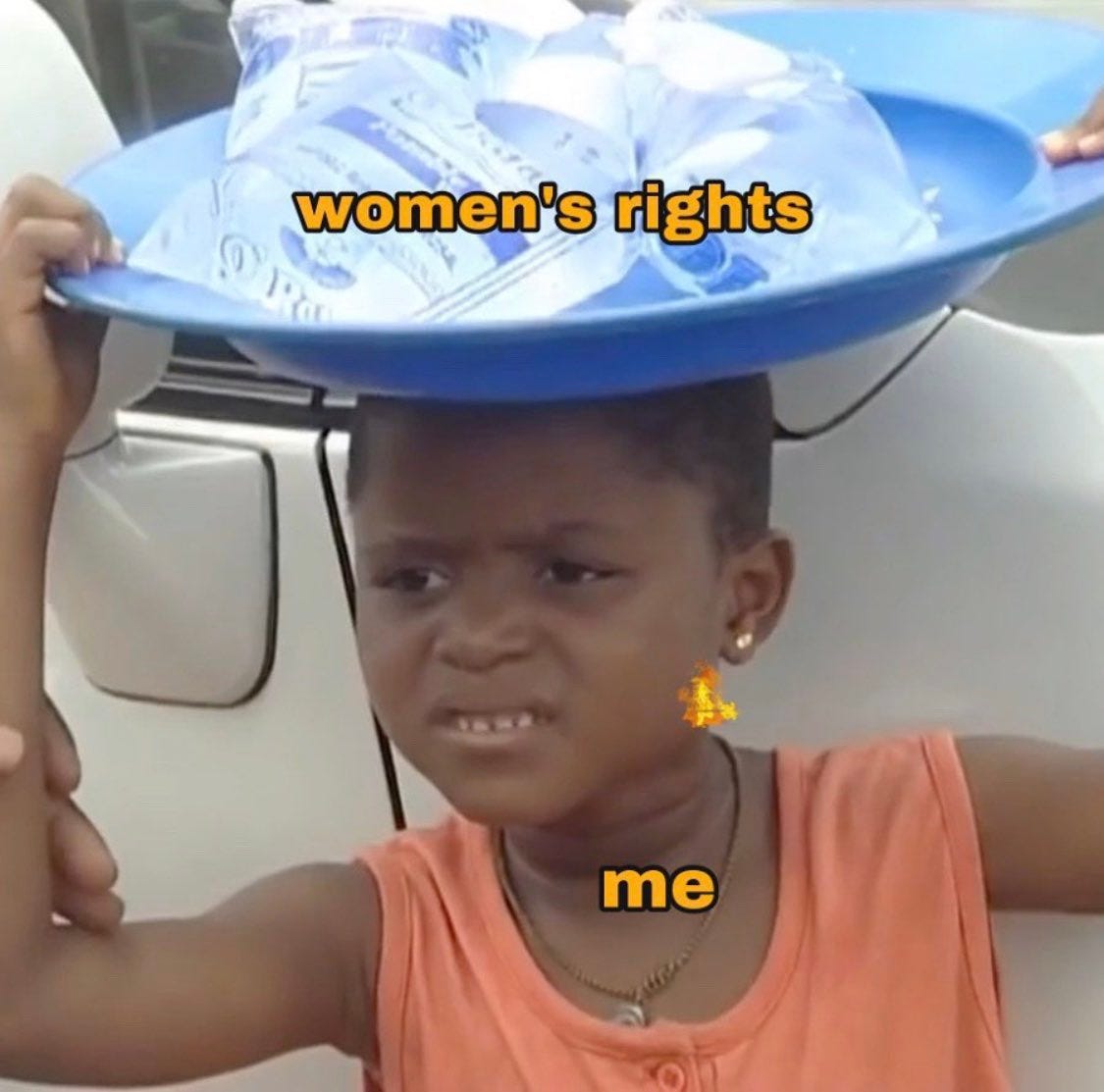
To my sisters in the struggle: Do not lean into the respectability politics that ask you to be a softer version of your truth just to be digestible.
If being a Nigerian woman who demands equity makes you a red flag, then tie that flag around your waist like a wrapper. Wear it like a gele. Let it be the brightest thing in the room.
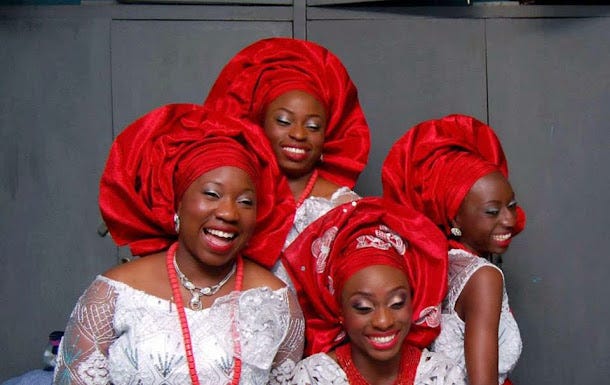
After all, red is the color of passion, of life, and—in the right hands—of power. If there are no compromises, then don’t make any. Stay dangerous. Stay red. 🚩
With love, your red flag-wielding Unraveler 💟
Anu.
I loved reading this